Direction
Developing capability by design for understanding and context.
Professionalism
The way we work.
Capability
Knowledge and abilities to deliver against the plan.
Impact
The benefit to us, our business, the economy and society.
A good business strategy balances clear and focused direction, practical tactics, and a skilled and responsible workforce. These components keep your marketing aligned with your business goals, creating a powerful force for good. The framework forms the foundation for this robust approach, defining what it takes to be a competent, proficient, and relevant marketer.
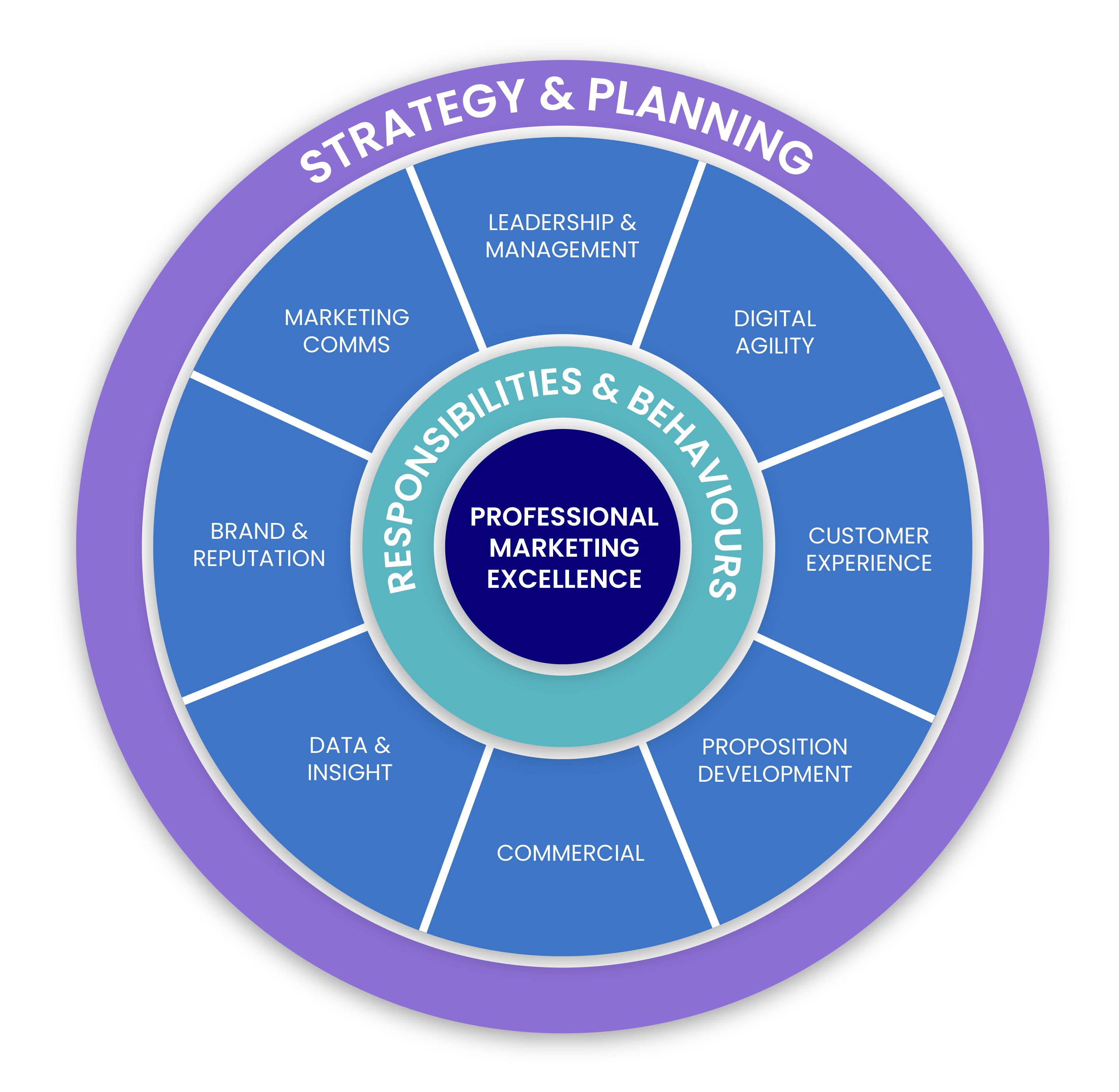
Clear strategic direction ensures marketing is purposeful and aligned with business goals. It involves planning, context, and foresight - developing the capability to anticipate change and design strategies that create long-term value.
Capability is the applied knowledge, skills, and behaviours that bring strategy to life. From brand and comms to data and leadership, it’s about building confident marketers who can deliver real results.
Professionalism defines how marketers operate - ethically, responsibly, and with purpose. It covers roles, standards, and conduct, ensuring marketers act with integrity and lead by example across all levels of the organisation.
Impact is the outcome of great marketing. It drives business performance, shapes customer experiences, and contributes to economic growth and societal good - demonstrating the real value of marketing in action.

CIM Global Professional Marketing Framework by The Chartered Institute of Marketing is licensed under CC BY-NC-ND 4.0


Competency levels
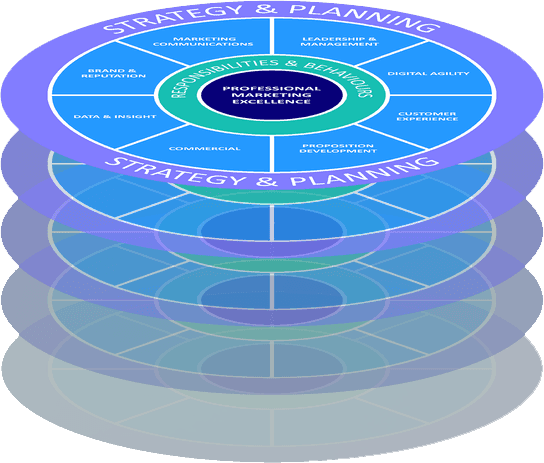
The competency levels define what good looks like at each stage of a marketing career. From entry-level awareness to expert leadership, the scale helps assess knowledge, experience, and the ability to apply marketing in practice. Use it to identify strengths and development areas - whether for yourself, your team, or potential hires.
Essential marketing capabilities
Effective organisations typically require a balance of both leadership and management to succeed, with leaders providing vision and inspiration, and managers ensuring that the vision is translated into action and results.
- Organisational development
- Project planning
- Resource management
- People, performance and capability
For marketers to be agile, they must be aware of emerging trends in digital channels, technology, automation and Al. Continuous learning and adaptation ensures that marketers are well-equipped to optimise campaigns, engage with evolving technologies, and make data-driven decision.
- Artificial Intelligence (AI)
- Emerging trends
- Channels
- Business modelling
- Technology (e-commerce, UX, analytics)
Delivering a first-class customer experience and achieving customer advocacy requires a focus on data-driven personalised experiences.
- Customer journey (CRM)
- Omnichannel experience
- Expectations
- Segmentation and personas
- Organisational alignment
These are the required skills to effectively plan, forecast, develop and position a product throughout the product life-cycle.
- Value proposition
- Market profile
- Strategic fit
- Creative positioning
- Innovation
A marketer's ability to make financial decisions, understand relevant governance and risk, consider external and stakeholder influence on the organisation's marketing as well as its competitive stance.
- Financial awareness (forecast/budgeting)
- External influences
- Stakeholder management
- Competitive stance
- Governance and risk
The skills required to gather, interpret and use data effectively, within the framework in which data is governed in your organisation.
- Research (input and output)
- Metrics and trends (social listening)
- Data governance
- Data transition
The skills required to manage brand positioning with clear guidelines that protect brand reputation, tracking and measuring its performance and equity, to inform future strategy.
- Identity
- Equity
- Brand management
- Brand reputation (crisis management)
The skills required to develop and integrate marketing communications strategy within business strategy, using both physical and digital communications tools in a consistent way.
- Integration
- Multi-channel
- Content
- Communications strategy

Content hub
Browse the latest thought leadership and expert commentary on key marketing topics. Read articles, listen to podcasts, watch webinars and keep up to date with our forever changing industry.

Training courses
Develop your skills with a CIM approved training course. Our courses are aligned with the GPMF to cover the capabilities modern marketers need to succeed.

Qualifications
Prove your marketing ability, boosts your career prospects, and keep your skills sharp and relevant. Recognised globally, they help you stand out, build credibility, and unlock new opportunities.
Explore related pages

